
24/7 MOBILE TYRE FITTING ACROSS THE UK
Mobile Tyre Fitting London – Professional Tyre Assistance Wherever You Are
Unexpected tyre damage can disrupt your journey, delay your work or leave your vehicle unable to move. Premium Mobile Tyres provides mobile tyre assistance across its London service areas, helping drivers arrange professional support at home, at work or at a suitable roadside location.
Unexpected Tyre Problems Can Disrupt Any Journey Across London
A tyre problem rarely happens at a convenient time. It may appear during the morning commute, while travelling between business appointments, on the way to an airport or when a commercial vehicle is halfway through its delivery schedule.
When a flat tyre interrupts your daily journey
Discovering a flat tyre before leaving home can immediately disrupt a planned journey. The vehicle may have been parked overnight, but a slow puncture, damaged valve or existing tyre defect can cause significant pressure loss while it is stationary.
Some drivers attempt to inflate the tyre and continue driving without identifying the cause. However, if the tyre has suffered structural damage or continues to lose pressure, simply adding air does not resolve the underlying problem.
A professional assessment helps establish whether the tyre can be safely repaired or needs replacing.
When a puncture affects a business or delivery vehicle
For drivers who depend on their vehicles for work, a damaged tyre can mean more than an inconvenient delay. Delivery schedules, customer appointments, tradespeople’s jobs and time-sensitive collections can all be affected.
A van carrying tools, equipment or goods also has different loading requirements from an ordinary passenger car. The replacement tyre must be suitable for the vehicle and its intended load.
Mobile tyre assistance can help businesses arrange support at an accessible workplace, depot, customer location or other suitable parking area, subject to availability and site access.
When tyre damage makes a vehicle unsafe to drive
A sudden loss of pressure can happen because of a puncture, impact damage or tyre failure. If the tyre has collapsed or suffered significant damage, driving on it may create further risks.
Contact our team to discuss mobile tyre replacement at a safe, accessible location.
How London's Roads and Driving Conditions Can Affect Your Tyres
Tyres are the only part of a vehicle designed to maintain direct contact with the road. They must manage steering, braking, acceleration and the weight of the vehicle while responding to changing road surfaces and driving conditions.
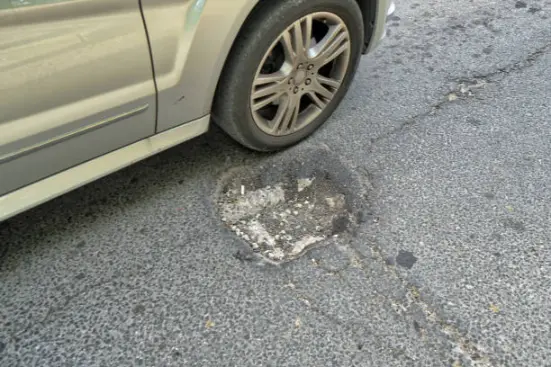
Potholes and impact damage
A pothole can create a sudden impact between the tyre and the road surface. The severity depends on factors such as the pothole’s depth, the vehicle’s speed, tyre pressure, wheel design and the angle of impact.
After a significant impact, a driver may notice:
- A bulge or swelling on the tyre sidewall.
- A visible cut or deformation.
- A sudden reduction in tyre pressure.
- Steering vibration or an unusual sensation through the vehicle.
- Damage to the wheel rim.
- A change in how the vehicle handles.

Kerb damage and sidewall cuts
London’s residential streets, narrow roads and restricted parking spaces can make manoeuvring challenging, particularly for larger vehicles.
Repeated contact with kerbs can damage tyre sidewalls, while a severe impact may cause cuts, abrasions or internal damage that is not immediately obvious.
- Scraping or exposed rubber.
- A cut along the sidewall.
- A localised bulge.
- Pressure loss after striking a kerb.
- Damage to the alloy wheel's outer edge.
Stop-start traffic and repeated braking
Driving through busy London routes often involves frequent acceleration, braking, junction approaches and changes in traffic speed.
Although normal urban driving does not automatically damage a tyre, repeated braking, cornering, incorrect inflation and poor wheel alignment can contribute to uneven wear over time.
Air can sometimes escape from the area where the tyre meets the wheel. This is known as a bead or sealing-area leak.
Unlike a conventional tread puncture, the problem may occur around the edge of the tyre rather than through the main tread surface.
Possible contributing factors include:
- Uneven tread wear across the tyre.
- Excessive wear along one shoulder.
- Changes in steering response.
- Vibration at particular speeds.
- Repeated pressure warnings.

Road debris, nails and sharp objects
Screws, nails, glass and other sharp objects can penetrate a tyre’s tread and allow air to escape.
Some punctures develop slowly. A vehicle may retain enough pressure to complete a short journey before the driver notices a warning. Others cause rapid deflation and leave the vehicle immobilised.
However, not every puncture can be repaired.
Repairability depends on the location and size of the damage, the tyre’s construction, its condition and whether it has been driven while significantly under-inflated. Damage to the shoulder or sidewall generally makes a tyre unsuitable for a conventional repair.
If you discover an object embedded in a tyre, avoid pulling it out yourself. Doing so may accelerate air loss and make the situation worse.
High-mileage driving and premature tyre wear
London-based tradespeople, delivery drivers, private hire operators and commercial fleets may cover substantial distances every week.
Frequent journeys, heavy loads, repeated braking and different road surfaces can contribute to tyre wear. Vehicles that operate throughout the working day may also experience pressure changes and damage that are overlooked during busy schedules.
Regular tyre inspections should include tread condition, inflation pressure, visible damage and signs of uneven wear.
For cars and light vans, the general UK legal minimum tread depth is 1.6mm across the central three-quarters of the tread and around the complete circumference. Drivers should not wait until a tyre reaches the legal limit before considering replacement.

Locations
Mobile Tyre Assistance Across Central, North, South, East and West London
Central London
Central London combines commercial buildings, residential developments, visitor destinations and heavily used urban roads.
- Westminster
- Mayfair
- Soho
- Marylebone
- Paddington
- Victoria
- Holborn
- Bloomsbury
- King's Cross
- South Bank
- London Bridge
- Kensington
- Chelsea
North London
North London includes established residential neighbourhoods, busy local centres and routes connecting the capital with surrounding areas.
- Camden
- Islington
- Barnet
- Enfield
- Haringey
- Finchley
- Wood Green
- Tottenham
- Edmonton
- Hampstead
- Highgate
- Muswell Hill
South London
Dudley is part of the Black Country, with a combination of residential communities, local businesses and established industrial areas.
- Croydon
- Bromley
- Sutton
- Merton
- Wimbledon
- Mitcham
- Streatham
- Tooting
- Balham
- Brixton
- Clapham
- Dulwich
- Crystal Palace
- Greenwich
East London
East London includes business districts, residential neighbourhoods, industrial locations and major routes serving commercial traffic.
- Stratford
- Newham
- Hackney
- Bow
- Wednesbury
- Walthamstow
- Canning Town
- Canary Wharf
- Barking
- Dagenham
- Ilford
- Romford
West London
West London connects residential neighbourhoods, commercial locations, airport-related routes and major transport corridors.
- Hammersmith
- Fulham
- Ealing
- Acton
- Chiswick
- Brentford
- Wembley
- Harrow
- Hayes
- Southall
- Greenford
- Uxbridge
London postcodes and surrounding districts
London’s postcode districts provide another useful way to identify a vehicle’s location when arranging assistance.
Central London:
- WC1–WC2, EC1–EC4, SW1, W1.
North London
- N1–N22, NW1–NW11
South London
- SE1–SE28, SW2–SW20, CR, SM, BR.
East London:
- E1–E20, IG, RM.
West London
- W1–W14, UB, HA, TW.
Assistance around London's major roads
- M25 – London Orbital Motorway.
- M1 – North London approach.
- M4 – West London corridor.
- M3 – South-West London approach.
- A1 – North London.
- A2 – South-East London.
- A3 – South-West London.
- A4 – Central and West London.
- A10 – North-East London.
- A12 – East London.
- A13 – East London.
- A20 – South-East London.
- A23 – South London.
- A40 – West London.
- A406 – North Circular Road.
- A205 – South Circular Road.
HOW IT WORKS
How Premium Mobile Tyres Helps Resolve Your Tyre Problems
01
Tell Us About Your Tyre Problem
Contact our team with your London postcode, vehicle make and model, tyre size and a brief description of the damage. Photographs of the tyre and its markings can also help us understand your requirements.
02
Identify the Correct Tyre Specification
03
Assess Repair or Replacement
Not every puncture can be repaired. Tread punctures may be repairable following inspection, whereas sidewall damage, structural defects and certain impact-related problems generally require replacement.
04
Confirm Assistance and Availability
05
Professional Fitting and Safety Checks
Why choose Premium Mobile Tyres?
Why London Drivers Choose Premium Mobile Tyres
When a tyre problem interrupts your day, you need more than a generic service description. You need clear communication, suitable replacement options and assistance that takes your actual vehicle and location into account.
Assistance based on your actual location
A tyre problem at home is different from one affecting a vehicle in a busy workplace car park or commercial premises.
Providing an accurate location helps our team understand access requirements and assess whether assistance can be arranged.
Solutions for different vehicle types
From passenger cars and family SUVs to working vans and eligible commercial vehicles, tyre selection must reflect the vehicle’s specifications and operating requirements.
We consider the relevant details before recommending a suitable replacement.
Professional attention to tyre safety
A damaged tyre should never be replaced or repaired without considering its condition.
Our approach places importance on identifying the type of damage, assessing repairability and selecting a compatible replacement where necessary.
Clear communication before assistance is arranged
We want customers to understand what information is required, which service may be appropriate and what arrangements can be made.
Our team can discuss tyre requirements, availability, location and quotation details before confirming assistance.
Support when unexpected problems occur
Tyre problems do not always follow a convenient schedule. Drivers may need help before work, during a busy day or after normal business hours.
Contact our team to check the availability of the appropriate assistance for your location and circumstances.
FAQs
COMMON QUESTIONS
Can I arrange mobile tyre fitting at my home or workplace in London?
Yes, mobile tyre assistance may be arranged at a suitable home or workplace location within our confirmed service coverage. The vehicle must be accessible, with enough safe working space for the technician to complete the required work. Contact us with your postcode and vehicle details to check availability.
Can you help if my car has a flat tyre outside my home?
Yes, you can contact Premium Mobile Tyres if your vehicle has a flat tyre at home. Provide your location, vehicle details and information about the tyre’s condition. The appropriate solution will depend on whether the damage is repairable or the tyre requires replacement.
What information should I provide when requesting mobile tyre assistance?
Provide your postcode or exact location, vehicle make and model, current tyre size, description of the damage and whether the vehicle is still movable. Photographs of the tyre markings and visible damage can help the team understand your requirements.
Can a mobile tyre technician attend a London car park?
Assistance may be possible in an accessible car park, but it depends on the site’s conditions. Underground height restrictions, vehicle access, parking permission, working space and safety requirements must be considered before attendance.
Can I get help if my tyre is damaged on the M25 or another major London route?
Your immediate safety comes first. Follow the Highway Code and use an appropriate place of relative safety. Routine mobile tyre fitting should not be attempted in a live motorway lane or an unsafe location. Once your vehicle is at a suitable accessible location, contact us to discuss the available assistance.
Do you cover every London postcode?
Coverage depends on the exact location, technician availability and operational access. London postcode districts can also extend beyond the boundaries of Greater London. Contact Premium Mobile Tyres with your full postcode so that our team can confirm whether assistance can be arranged.
Can I request tyre assistance outside normal working hours?
Contact our team to check the availability of the appropriate service at your location. If you require assistance at night, on a weekend or during a public holiday, explain the urgency and provide your exact location when enquiring.
Need A Tyre?
Need Mobile Tyre Assistance in London? Contact Premium Mobile Tyres
A damaged tyre should not have to turn a short journey into a major disruption.
Whether you have discovered a flat tyre outside your home, experienced a puncture during your commute, damaged a sidewall after hitting a pothole or need assistance with a commercial vehicle, Premium Mobile Tyres is here to discuss the appropriate solution.
Tell us where your vehicle is, what has happened and which tyre assistance you require. Our team can check service availability, discuss suitable tyre options and explain the next steps.